The Quilts We Keep
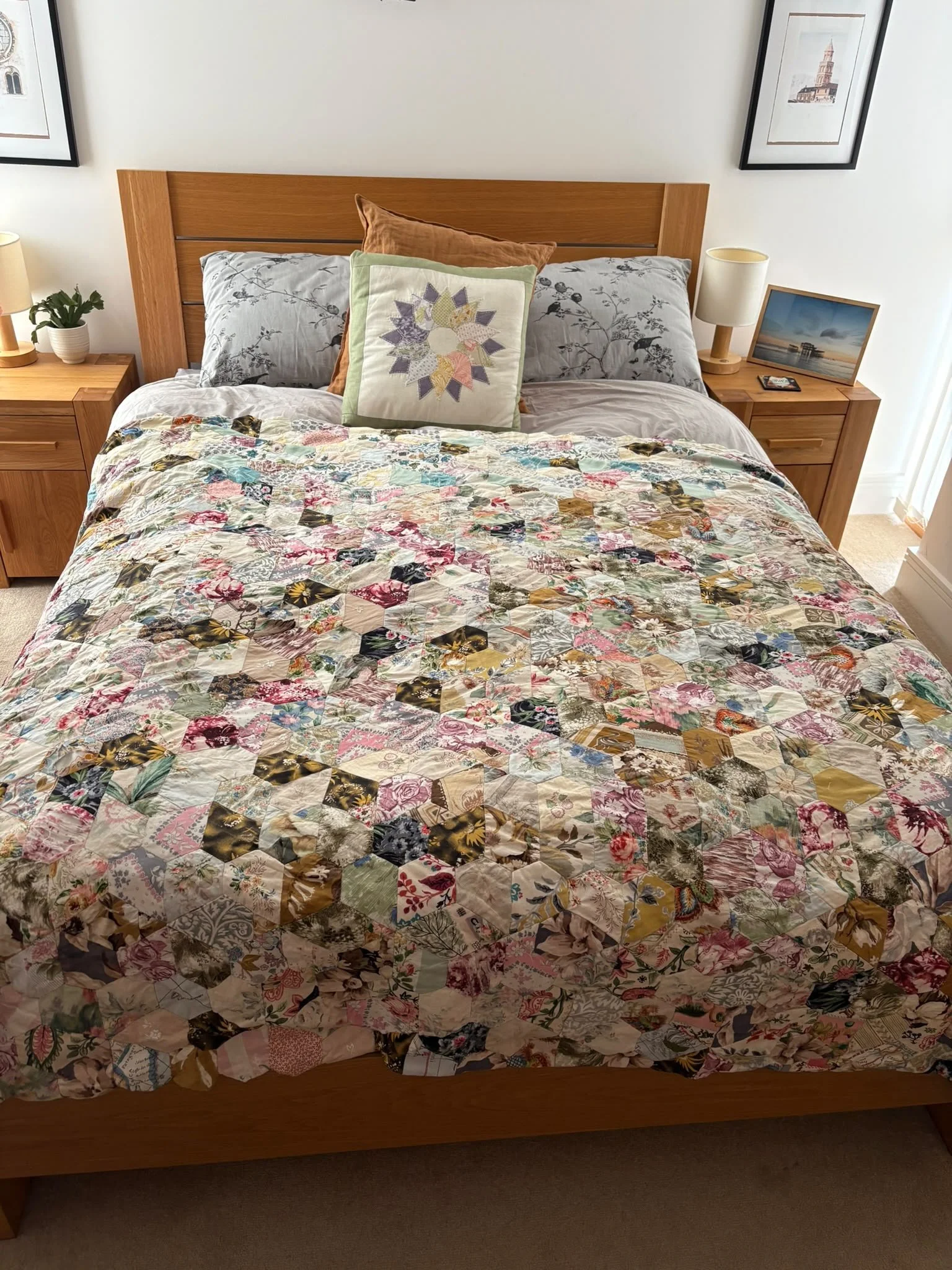
My Great Grandmother’s Patchwork Quilt
Today, I was flicking through the new November issue of Country Living when an article about antique patchwork quilts stopped me.
Apparently, they are now highly collectible.
I smiled when I read that. Not because I’m about to start valuing the contents of the linen cupboard, but because I have a rather special old quilt of my own. It was made by my great-grandmother and I have been slowly, carefully restoring it.
The article describes old patchwork as offering a “tangible connection to the lives of our (primarily) female ancestors”.
That stayed with me.
Made from what was already there
Patchwork wasn’t originally about buying perfectly coordinated bundles of fabric and arranging them beautifully on a cutting table.
It was practical.
Fabric was valuable, so worn clothes, household linens and leftover pieces were kept. Small sections that were still useful could be cut out and stitched together. A scrap might be insignificant on its own, but joined to dozens of others it became something useful again.
And sometimes something beautiful.
That idea feels remarkably contemporary, although of course it isn't contemporary at all. Reusing textiles, working with what we already have and finding value in remnants are things previous generations understood perfectly well.
It is also very close to the way I work at Brighton Stitch.
I’m fascinated by textiles that have already had a life. A piece of denim, an old linen cloth, a furnishing sample or a fragment of beautiful cotton doesn't necessarily become waste because its original purpose has ended. Sometimes it simply needs another idea.
My great-grandmother's quilt
Knowing more about the history of patchwork has made me look differently at my great-grandmother's quilt.
I don't know every story contained within its pieces. I can't ask her why she chose one fabric rather than another, where a particular scrap came from or what she was thinking as she stitched it.
But her hands made it.
There is something extraordinary about that simple fact.
I can hold something she held. I can see the decisions she made and the stitches she put into cloth, long before I was here. The quilt has survived because somebody kept it, then somebody else kept it, and eventually it reached me.
It isn't pristine. That's rather the point.
Age, wear and repair are part of its history.
Reading that collectors are increasingly interested in quilts like this has actually made me more determined to continue restoring mine. Not to make it look new, and certainly not to erase its age, but to preserve enough of it that its story can continue.
And now I'm making another one
There is another quilt waiting in my sewing room.
This one is mine.
I've already pieced the top, so the creative decisions have largely been made. It still needs assembling, quilting and binding before it finally becomes a finished quilt for our bed.
In the New Year, I'm going to do something slightly backwards.
Rather than choosing a quilt to suit the bedroom, I'm going to design the bedroom around the quilt.
I love that idea.
The colours and fabrics I have spent so many hours choosing and stitching together will become the starting point for everything else: paint, bed linen, furniture, perhaps artwork and the smaller objects in the room.
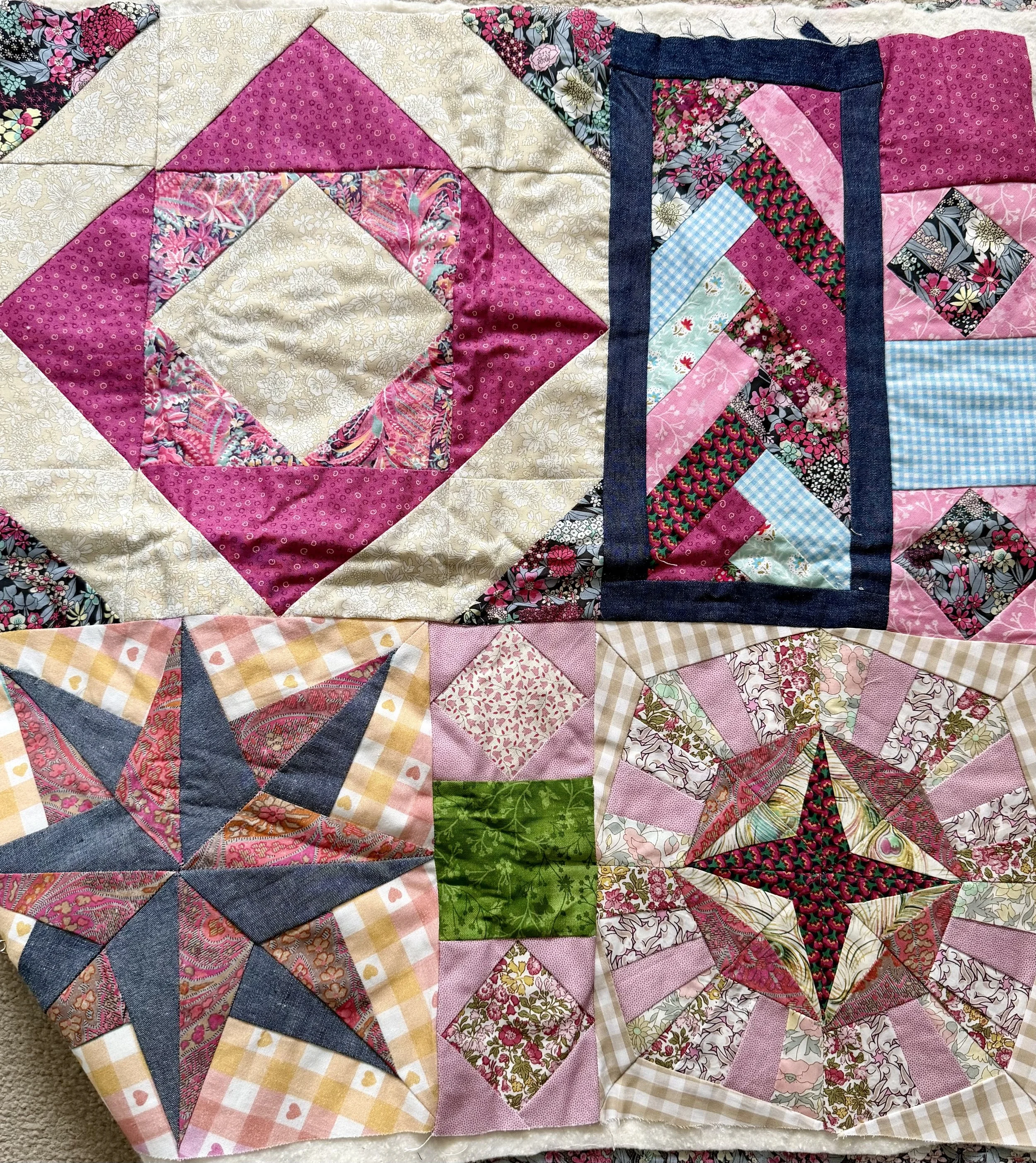
One of the 14 sections, of my Quilt in Progress
The handmade thing comes first.
The room follows.
What will someone see in it one day?
Making a new quilt whilst restoring one made by my great-grandmother creates a strange little thread through time.
Her quilt began as pieces of fabric.
So has mine.
She couldn't possibly have known that her great-granddaughter would one day be sitting with her work, repairing it and wondering about the woman who made it. And I have no idea where my own quilt will eventually end up.
Perhaps it will simply become rather battered from years of being slept under.
I hope so.
Perhaps somebody will repair one of my seams. Perhaps they'll recognise a particular fabric. Perhaps they'll wonder why on earth I put two colours next to each other.
Or perhaps they'll just know that somebody sat at a sewing machine, chose each piece and made the whole thing by hand.
We talk a lot about giving textiles another life at Brighton Stitch.
Sometimes, if we're lucky, the things we make have lives much longer than our own.
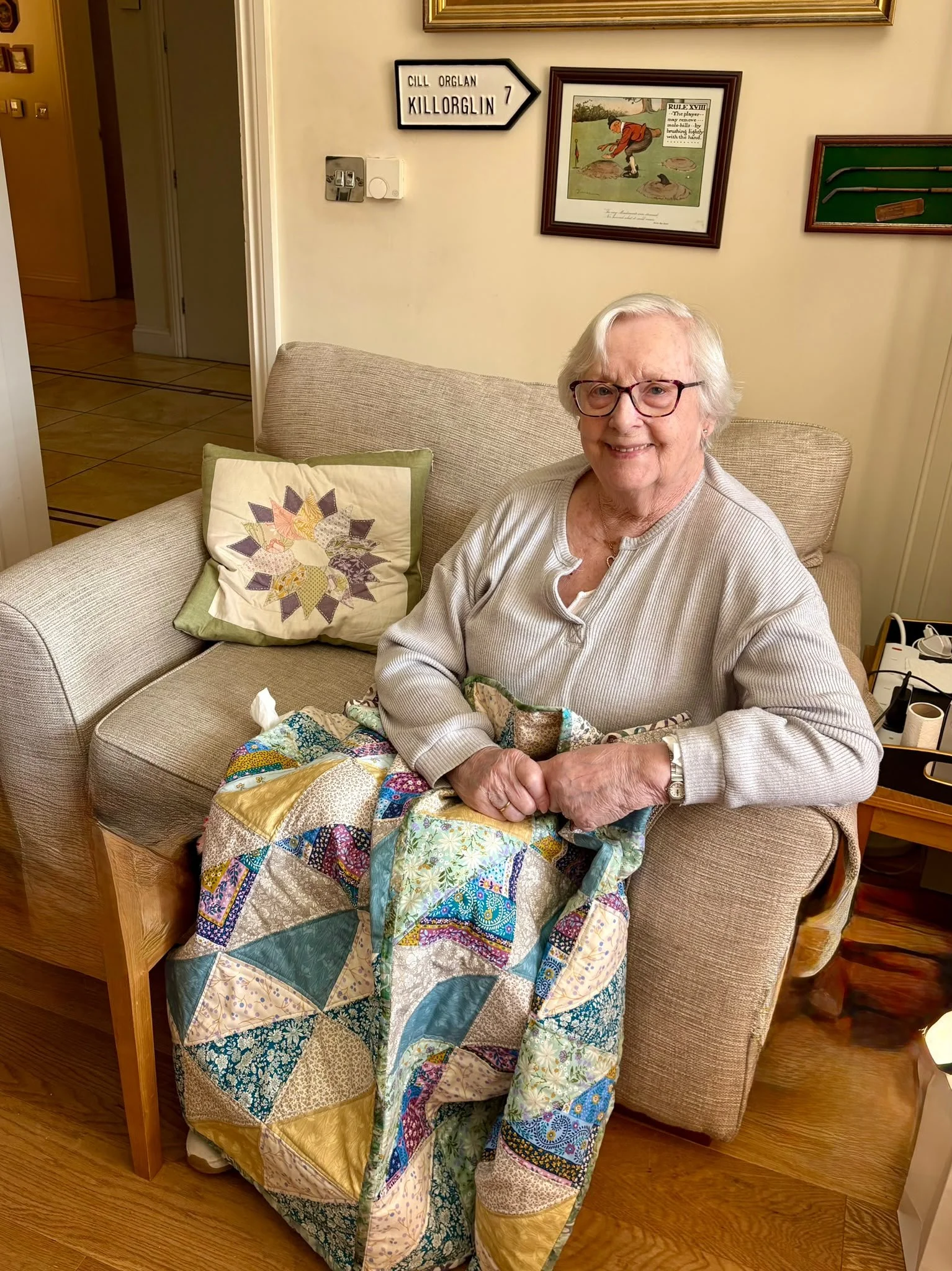
My Mum, with the lap quilt I made her this year
